
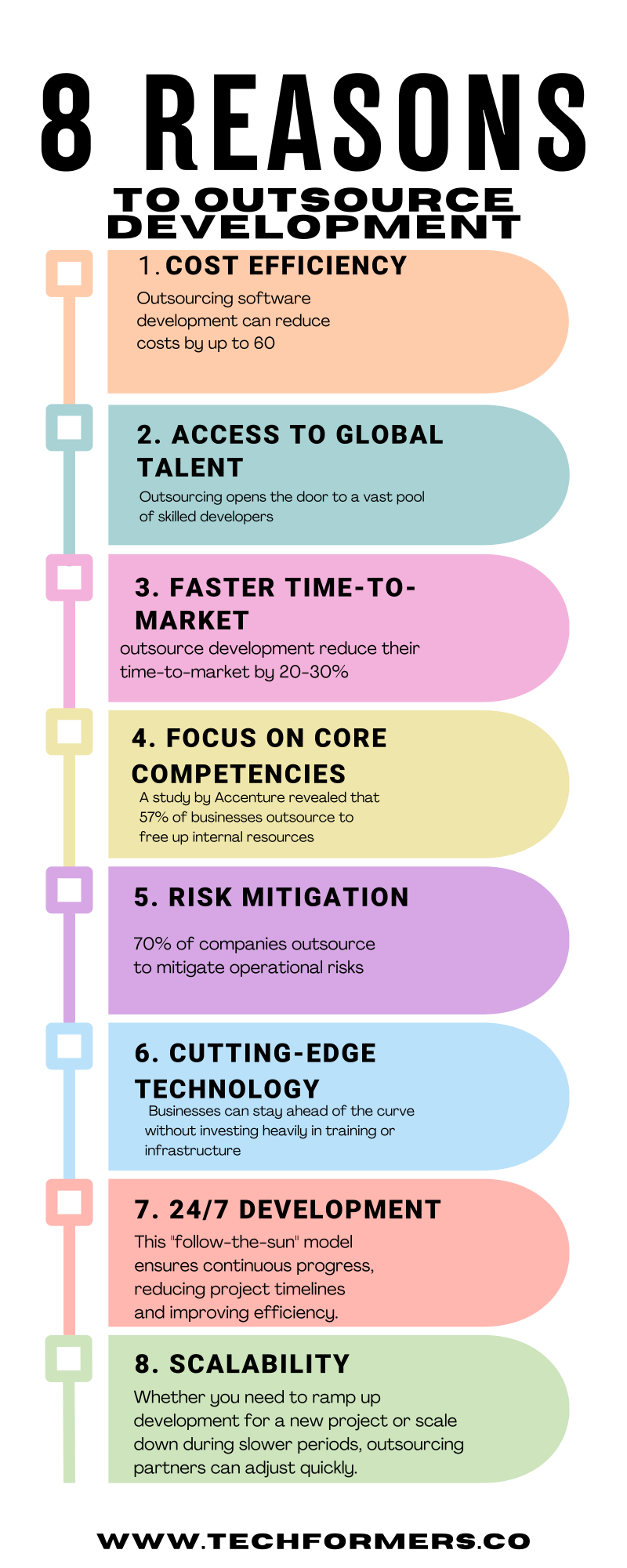
In 2025, the software development landscape will be more dynamic than ever, with businesses racing to innovate, scale, and stay competitive. Outsourcing software development has become a cornerstone strategy for companies worldwide, and for good reason. While listing 2025 reasons might be ambitious, the core benefits of outsourcing are backed by compelling statistics and trends that paint a clear picture of its growing importance.
1. Cost Efficiency: The Bottom Line of Outsourcing
Outsourcing software development can reduce costs by up to 60%, according to Deloitte’s Global Outsourcing Survey. By leveraging talent from regions with lower labor costs, businesses can allocate resources more effectively. For example, hiring developers in Eastern Europe or Asia can save companies 30-50% compared to in-house teams in the U.S. or Western Europe.
- Source: Deloitte Outsourcing Survey
2. Access to Global Talent
The global tech talent shortage is expected to reach 85 million workers by 2030, costing companies $8.5 trillion in lost revenue, according to Korn Ferry’s Global Talent Crunch Report. Outsourcing opens the door to a vast pool of skilled developers, ensuring businesses can find the expertise they need without geographical constraints.
- Source: Korn Ferry Talent Crunch Report
3. Faster Time-to-Market
In 2025, speed is everything. Outsourcing allows companies to accelerate development cycles by leveraging teams that work across multiple time zones. A McKinsey & Company report found that businesses that outsource development reduce their time-to-market by 20-30%, giving them a critical edge in competitive industries.
- Source: McKinsey & Company
4. Focus on Core Competencies
By outsourcing non-core activities like software development, companies can focus on their primary business goals. A study by Accenture revealed that 57% of businesses outsource to free up internal resources, enabling them to concentrate on innovation and customer engagement.
- Source: Accenture Outsourcing Insights
5. Scalability and Flexibility
Outsourcing provides unparalleled scalability. Whether you need to ramp up development for a new project or scale down during slower periods, outsourcing partners can adjust quickly. This flexibility is crucial in 2025, where market demands can shift overnight.
6. Cutting-Edge Technology
Outsourcing firms often specialize in the latest technologies, from AI and blockchain to IoT and cloud computing. By partnering with these experts, businesses can stay ahead of the curve without investing heavily in training or infrastructure.
7. Risk Mitigation
Outsourcing distributes risk across multiple parties. With experienced teams handling compliance, security, and quality assurance, businesses can reduce the likelihood of costly errors. A **PwC survey **found that 70% of companies outsource to mitigate operational risks.
- Source: PwC Global Outsourcing Report
8. 24/7 Development Cycles
With teams spread across the globe, outsourcing enables round-the-clock development. This “follow-the-sun” model ensures continuous progress, reducing project timelines and improving efficiency.
The Road Ahead
By 2025, the global IT outsourcing market is projected to reach $525 billion, driven by the increasing demand for digital transformation. As businesses navigate the complexities of a rapidly evolving tech landscape, outsourcing will remain a strategic imperative.
In conclusion, while 2025 reasons might be a poetic exaggeration, the benefits of outsourcing software development are undeniable. From cost savings and access to global talent to faster innovation and risk mitigation, outsourcing is not just a trend—it’s the future of software development. Companies that embrace this model will be well-positioned to thrive in the years to come.